
The BWI experience
A connected experience for practicing clinical judgment.
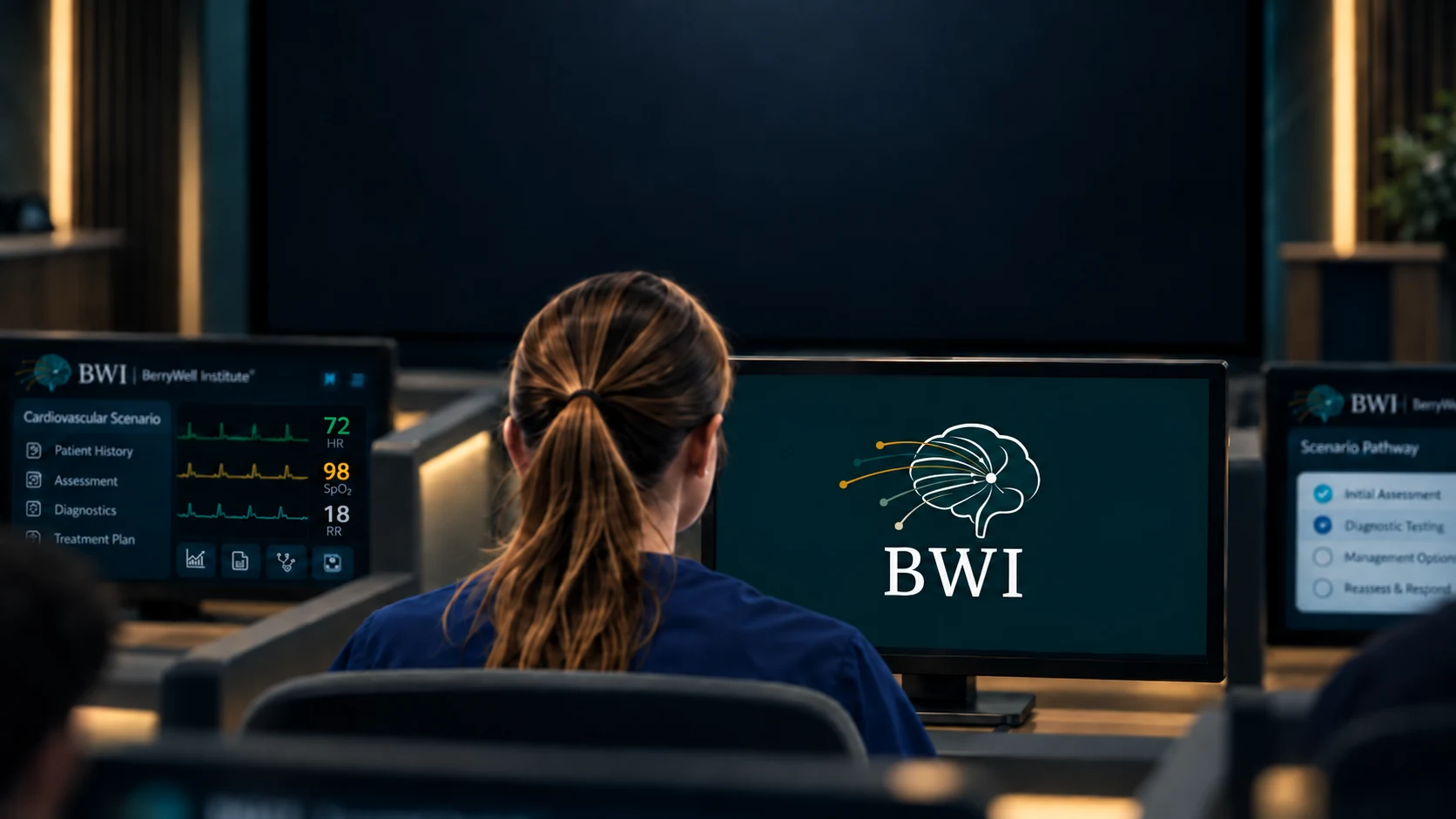
BWI brings patient context, evolving physiology, meaningful decisions, consequences, reassessment, and guided reflection into one learning experience.
- Patient context
- Evolving physiology
- Guided reflection
The BWI learning experience
From patient brief to guided reflection
A practice experience built around real clinical decisions.
Move through a changing clinical situation: understand the context, recognize what is changing, decide deliberately, observe what follows, reassess, and reflect.
- 01
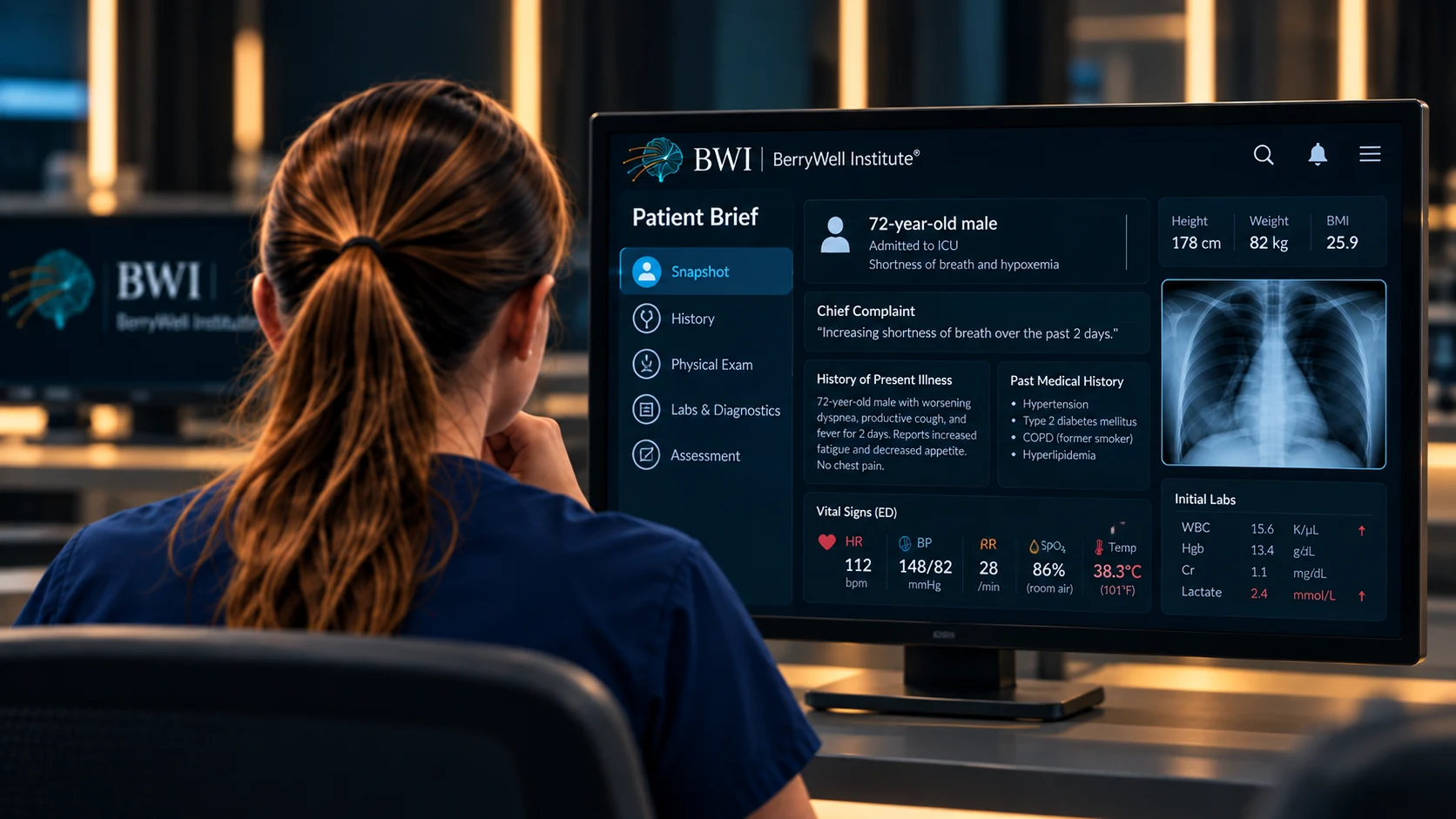
Begin with the clinical picture
Review a concise patient brief, relevant history, and scenario context. Identify the goals, risks, and initial priorities before the situation evolves.
- 02
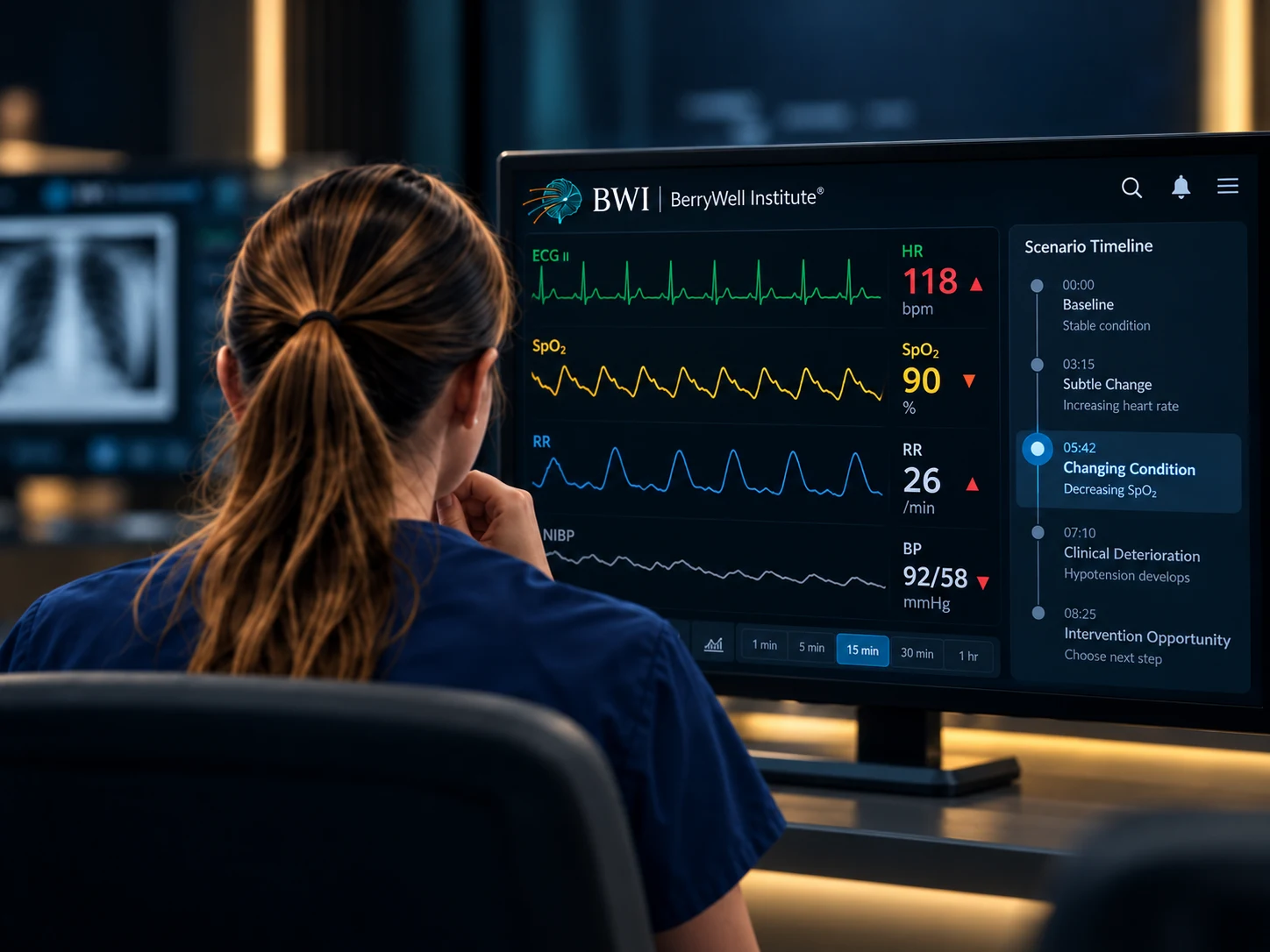
Read a changing situation
Monitor vital signs, waveforms, device states, and evolving clinical cues. Recognize the patterns and trends that should influence your thinking.
- 03
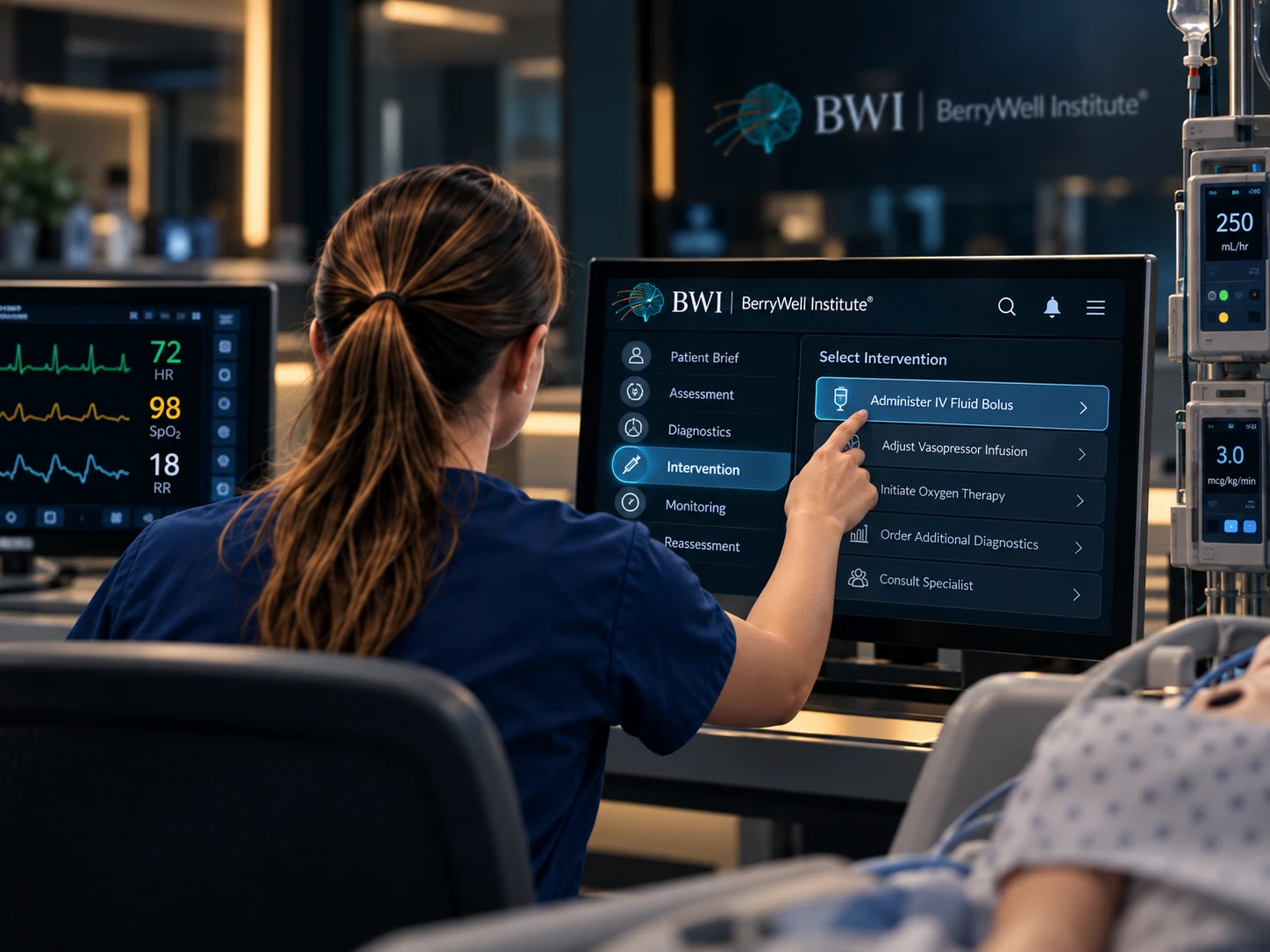
Decide what the situation requires
Choose among clinically plausible actions and interventions based on what matters most for this patient in this moment.
- 04
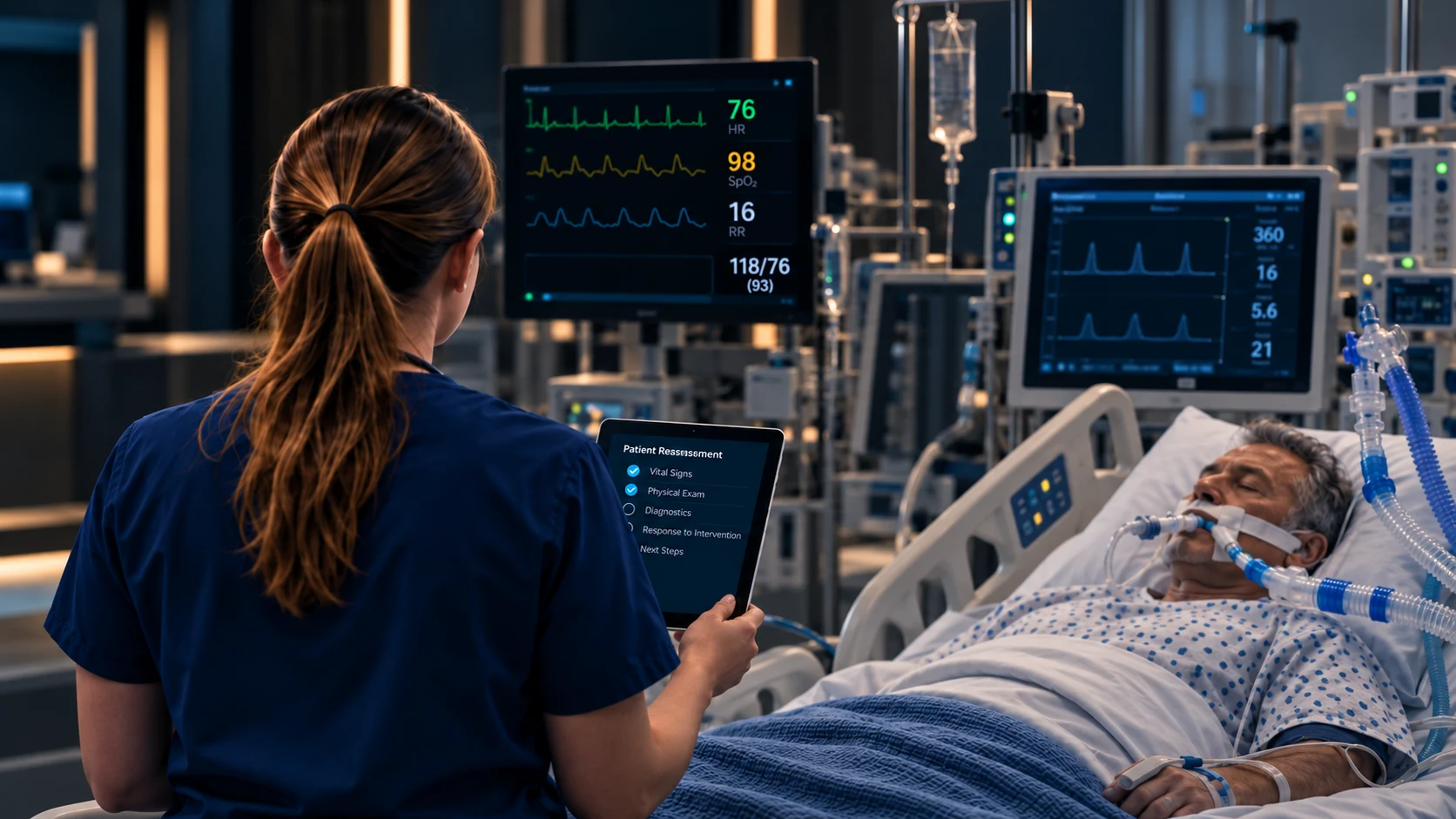
Observe what follows
See the patient and system respond over time. Reassess the situation as the consequences of intervention — or nonintervention — unfold.
- 05
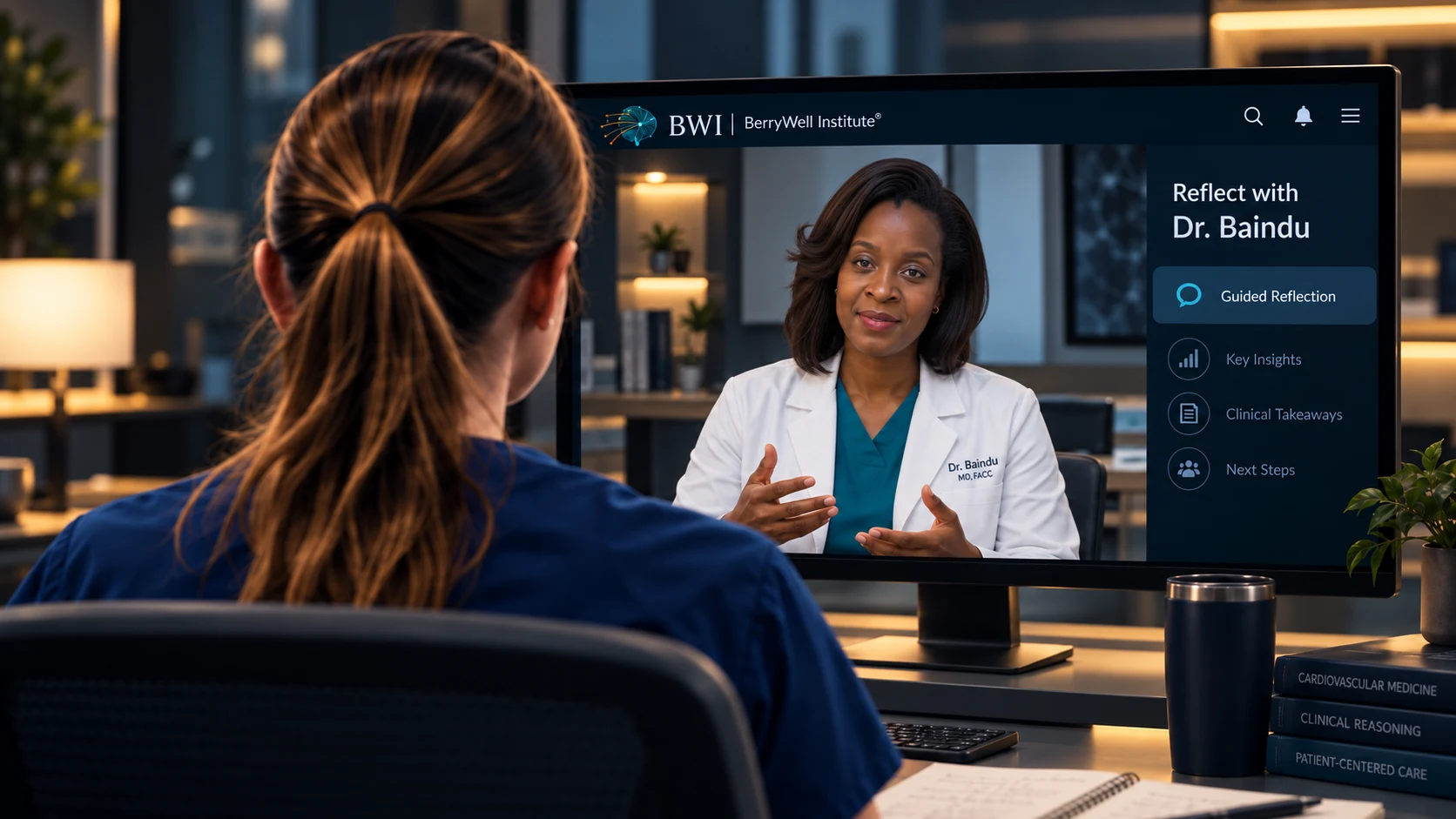
Reflect with Dr. Baindu
Examine what you noticed, prioritized, assumed, and chose. Guided reflection is followed by targeted assessment that reinforces the clinical reasoning behind the case.
Explore the BWI learning journey: Patient Brief → Changing Condition → Intervention → Reassessment → Reflection.
Dr. BainduMentor & Educator
The mentor experience
A trusted mentor at the center of reflection.
Dr. Baindu frames the reflection, asks questions that surface the learner's reasoning, and helps connect each decision with what followed.
Examines the moment
Revisits what the learner noticed and what mattered in the situation.
Challenges the reasoning
Questions assumptions, priorities, and the thinking behind the decision.
Guides reflection
Helps learners connect decisions with consequences and carry insight forward.
One experience, two perspectives
One learning experience, two working views.
Move between the learner experience and educator/program tools designed to support implementation, review, and follow-up.
Learner experience
Run the scenario.
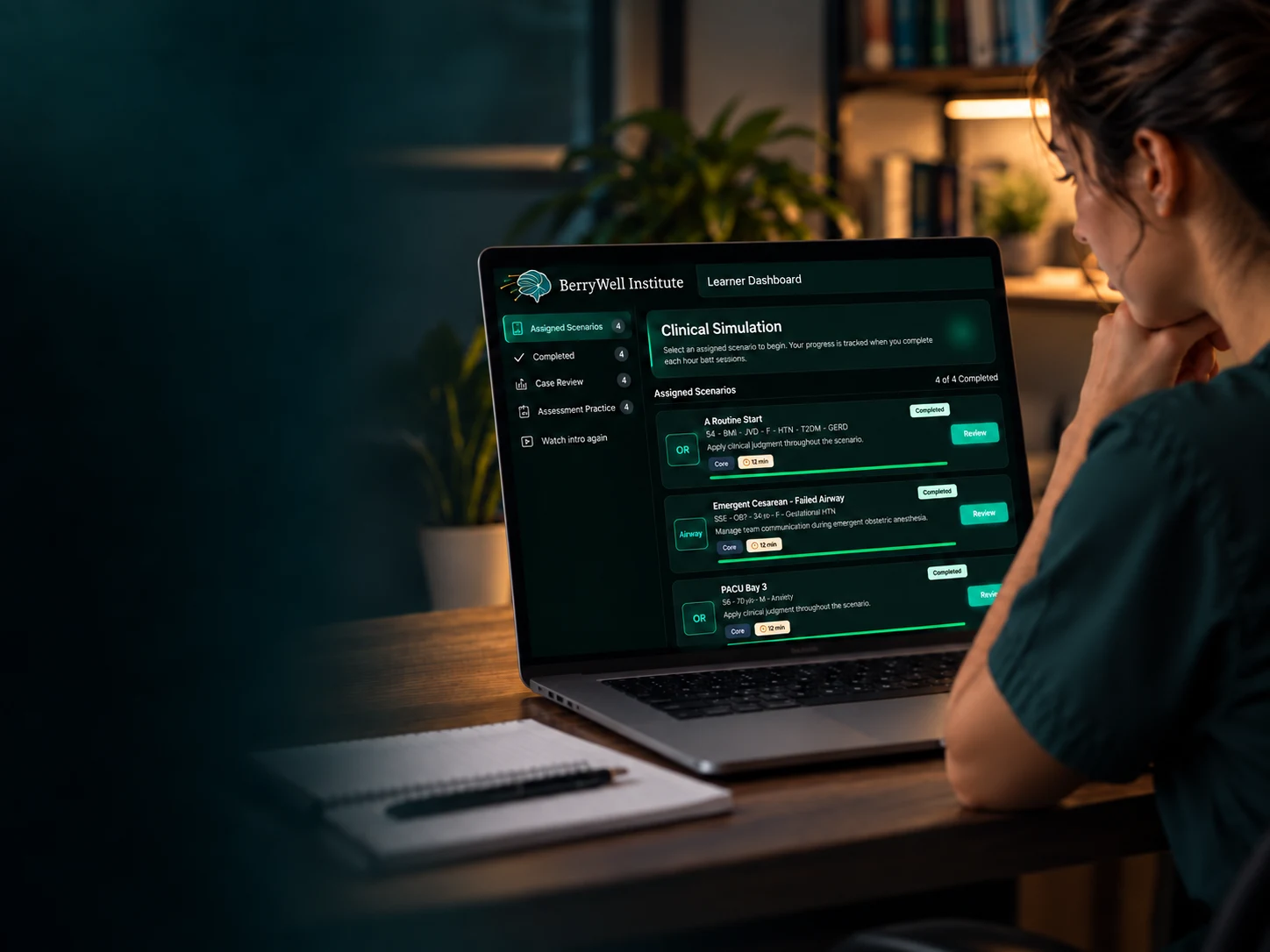
The learner experience is where clinical judgment is practiced, one decision at a time.
- Realistic, evolving scenarios
- Decision-driven interaction
- Visible physiologic changes and consequences
- Mentor-led reflection
- Available progress history
Educator & program tools
Review, support, and extend the learning.
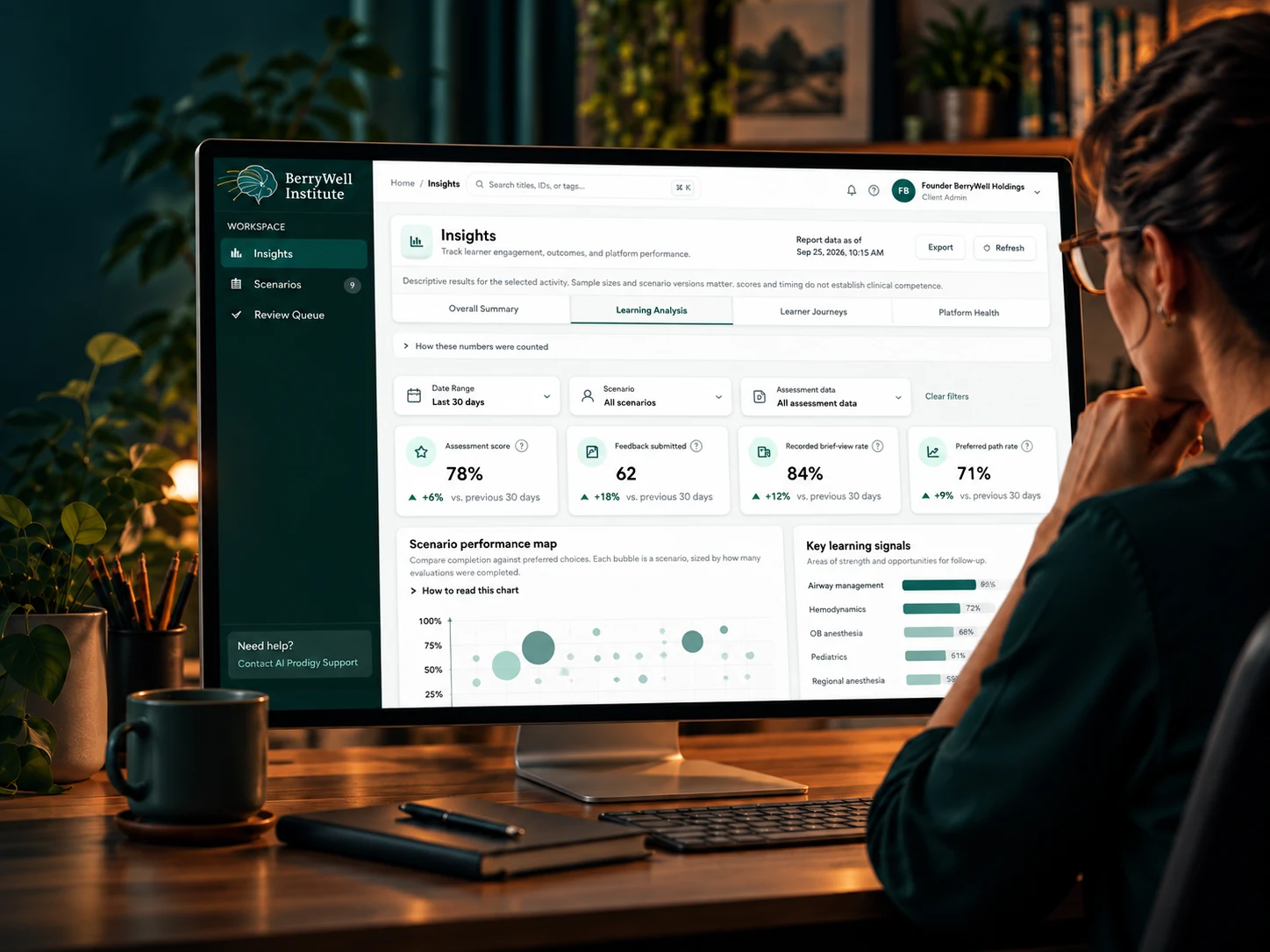
The educator environment supports review of BWI content, learner results, program-level insights, and structured faculty input within the BWI framework.
- Review available BWI scenario content
- Review available learner results, debrief, and assessment signals
- Use program-level insights to guide follow-up
- Support structured faculty input and institution-specific customization
- Preserve BWI-governed clinical and educational standards
Faculty-informed. BWI-governed.
Discuss educator useA learner reviews assigned clinical simulation scenarios and progress on the BerryWell Institute Learner Dashboard.
A connected learning environment
Four parts, one system.

Learner app
Practice decisions in realistic, evolving clinical situations.
Patient brief
Review the patient context, goals, risks, and key information that should inform the next decision.
Simulation monitor
Track physiologic signals, waveforms, and device states as the situation evolves.
Admin Center
Review learner results, program insights, and supported educator/institutional tools within the BWI framework.
Simulated learning
Public demonstrations use fictional or non-identifying simulated patient content.
No real patient information
BWI learning scenarios do not require real patient data.
Learning, not clinical care
The platform supports education and does not replace clinical judgment or patient-care systems.
Distinct working views
Learner and educator/program experiences are organized around different tasks and permissions.
Guided platform tour
Walk through the BWI experience.
See the learning flow from patient brief through evolving physiology, decision, consequence, reflection, and educator/program review.